



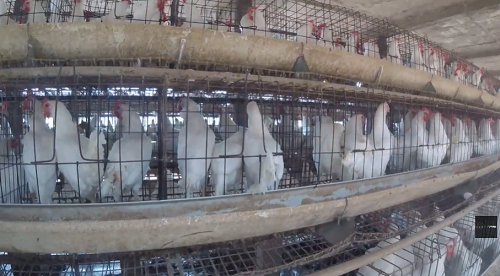
Sentient today released the findings of an investigation into 21 layer-hen poultry units across Haryana, Punjab, Madhya Pradesh and Tamil Nadu, documenting widespread animal welfare, hygiene, waste-management and biosecurity concerns across the facilities investigated.
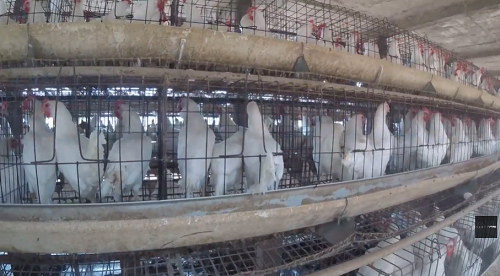 |
Chickens being kept under harsh conditions at the poultry farms
The investigation examined private poultry operations using battery-cage systems, with facilities ranging in estimated capacity from approximately 3,000 to 200,000 hens. The investigation found recurring concerns across multiple locations, suggesting that poor welfare and management practices were not isolated incidents but part of routine operating conditions.
Investigators documented severe overcrowding and fighting among hens, with widespread injuries observed across the facilities. Nearly all observed hens reportedly had injuries around the neck, apparently caused by repeated contact with metal cage bars. Wing injuries, broken legs, bleeding, skin conditions and severe physical weakness were also observed. Some hens were reportedly unable to stand.
Debeaking was identified as a routine practice across the facilities visited. Caretakers reported that hens underwent the procedure, while investigators documented visible injuries and blood loss associated with debeaking. In one facility, a worker was observed performing the procedure and invited the investigator to participate.
The investigation also documented signs of significant distress among the birds. Hens displayed continuous loud vocalisation and pronounced fear responses when people approached. Competition and aggression over limited cage space were observed, with weaker birds reportedly being attacked and, in some cases, killed. Investigators also documented instances of birds being handled roughly by workers, including chicks being thrown and vigorously handled following debeaking.
Hygiene and waste-management practices raised further concerns. Manure was observed accumulating beneath cages, sometimes reportedly remaining in place throughout a production batch. Strong foul odours resembling ammonia, rodents, cockroaches, stagnant water and mosquito larvae were observed at various facilities. Feed in some units showed visible signs consistent with fungal growth or possible contamination.
Waste-management systems varied across facilities. In several locations, manure and wastewater were poorly managed, with waste entering or clogging drains and contributing to stagnant or overflowing wastewater. Large quantities of waste were also observed accumulating in piles at some facilities. Carcass-disposal practices included burial in pits, burning and incineration; in one case, investigators documented a disposal site near a highway where carcasses were reportedly dumped without burial or incineration.
The investigation further found limited implementation of employee and visitor biosecurity measures. Investigators observed apparent biosecurity protocols at only one facility, while masks and other personal protective equipment were not provided or used at the remaining facilities. Flies, rodents, cockroaches and stagnant water were observed across the facilities, raising concerns about vector control and hygiene.
Investigators also observed children working at poultry facilities, including collecting eggs and cleaning premises. Neither adult workers nor children observed during the visits were equipped with masks or other personal protective equipment.
The investigation identified regulatory and compliance concerns in parts of the sector. In Madhya Pradesh, none of the seven facilities investigated reportedly possessed Consent to Establish or Consent to Operate from the Madhya Pradesh Pollution Control Board. The investigation also noted that complaints concerning some facilities had reportedly been submitted in 2024, citing alleged violations of applicable siting criteria and the absence of required consents. The 2026 visits indicated limited visible enforcement action beyond issuing a general public notice.
Key Observations
-
21 poultry units investigated across Haryana, Punjab, Madhya Pradesh and Tamil Nadu.
-
Facilities had estimated capacities ranging from approximately 3,000 to 200,000 layer hens.
-
All facilities investigated used battery-cage housing systems.
-
Severe overcrowding and fighting among hens were observed.
-
Widespread injuries included neck and wing injuries, broken legs, bleeding, skin conditions and severe physical weakness.
-
Debeaking was reported as a routine practice across the facilities visited, with injuries and blood loss documented.
-
Dead hens were observed both inside and outside cages, while staff at some facilities reported approximately 5–10 deaths per shed; actual mortality rates could not be independently verified.
-
Poor hygiene was documented, including manure accumulation, strong ammonia-like odours, stagnant water, rodents, cockroaches and mosquito larvae.
-
Waste and wastewater were poorly managed at several facilities, including drain blockages, stagnant or overflowing wastewater, and accumulated manure.
-
Limited employee biosecurity: apparent biosecurity measures were observed at only one facility.
-
Masks and other personal protective equipment were generally not provided or used.
-
Children were observed working at poultry facilities, including collecting eggs and cleaning premises.
-
Some facilities were located approximately 10–400 metres from residential areas.
-
All facilities were reportedly located near a national highway.
-
In Madhya Pradesh, none of the seven facilities investigated reportedly possessed Consent to Establish or Consent to Operate from the MPPCB.
-
Similar husbandry and management practices appeared routine and normalised rather than isolated, according to investigator observations.
-
The findings point to the need for stronger monitoring, enforcement, animal-welfare oversight, biosecurity and responsible waste management across poultry operations.
“The consistency of what our investigators documented across 21 facilities is deeply concerning. Practices such as severe overcrowding, routine debeaking, untreated injuries, poor waste management and weak biosecurity should not be accepted as business as usual. The findings point to a systemic gap between the standards that are expected and the conditions animals and workers may actually experience on the ground. Stronger enforcement, regular inspections and meaningful accountability are urgently needed to ensure that poultry production does not come at the cost of animal welfare, hygiene or public health,” said Abhishek Pandey, CEO, Sentient.
Following the investigation, Sentient calls for stronger implementation and monitoring of existing animal welfare, environmental, public health and poultry-sector regulations. The organisation also urges regular inspections of poultry facilities, improved biosecurity and veterinary support, responsible carcass and waste disposal, better protection for workers, and greater accountability for practices that compromise animal welfare and hygiene.
Sentient further recommends continued investigation of poultry facilities and hatcheries, particularly in Madhya Pradesh, to better document practices involving debeaking and the reported sourcing and handling of chicks.
Investigation videos
YouTube Video
About Sentient
Sentient is an organisation working to document and expose animal welfare concerns through evidence-based investigations, research and public awareness initiatives. By bringing credible documentation to light, the organisation seeks to strengthen accountability and encourage meaningful improvements in animal welfare standards across sectors.
